Examining How Casino Loyalty Tiers Shape Blackjack Decision Trees During Extended Play Sessions
Written by Ines Berger · Jun 5, 2026
Examining How Casino Loyalty Tiers Shape Blackjack Decision Trees During Extended Play Sessions
Casino loyalty programs assign players to tiers based on tracked play volume, and these classifications directly affect the incentives available during long blackjack sessions. Higher tiers unlock complimentary services that extend time at the table, which in turn modifies how players apply basic strategy and count-based deviations. Research from gaming analytics firms shows that tier benefits scale with theoretical loss calculations, creating measurable shifts in session length across player cohorts.
Loyalty Tier Mechanics and Play Incentives
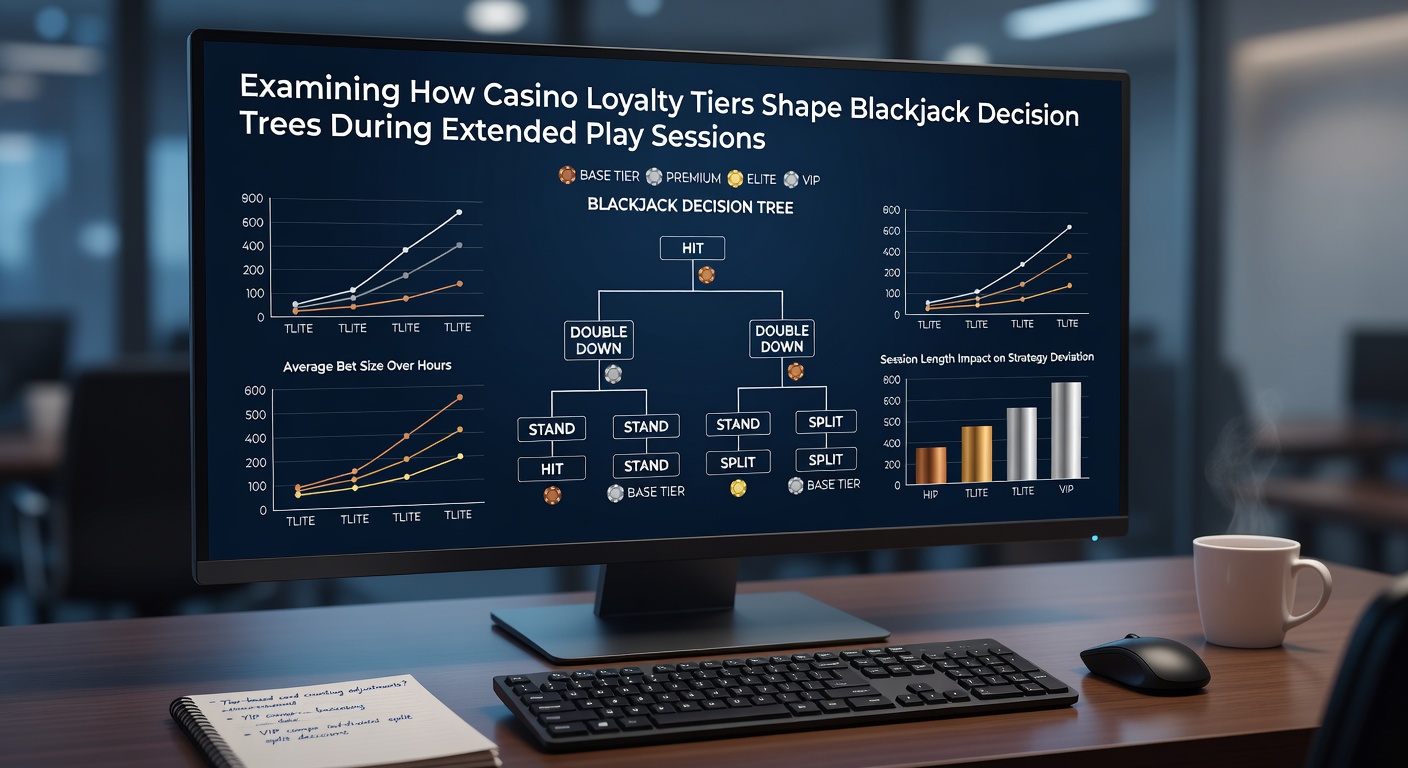
Programs track coin-in and time played through player cards, then calculate points that determine tier status. Entry-level tiers offer minimal rewards while mid and top tiers grant room nights, food credits, and sometimes cash back proportional to activity. These rewards accumulate faster for players who maintain higher average bets over many hours, which encourages extended sessions rather than short visits. Data from major resort operators indicate that platinum and diamond tier members average 40 percent longer table time than base-tier participants during comparable visits.
Blackjack Decision Trees in Prolonged Play
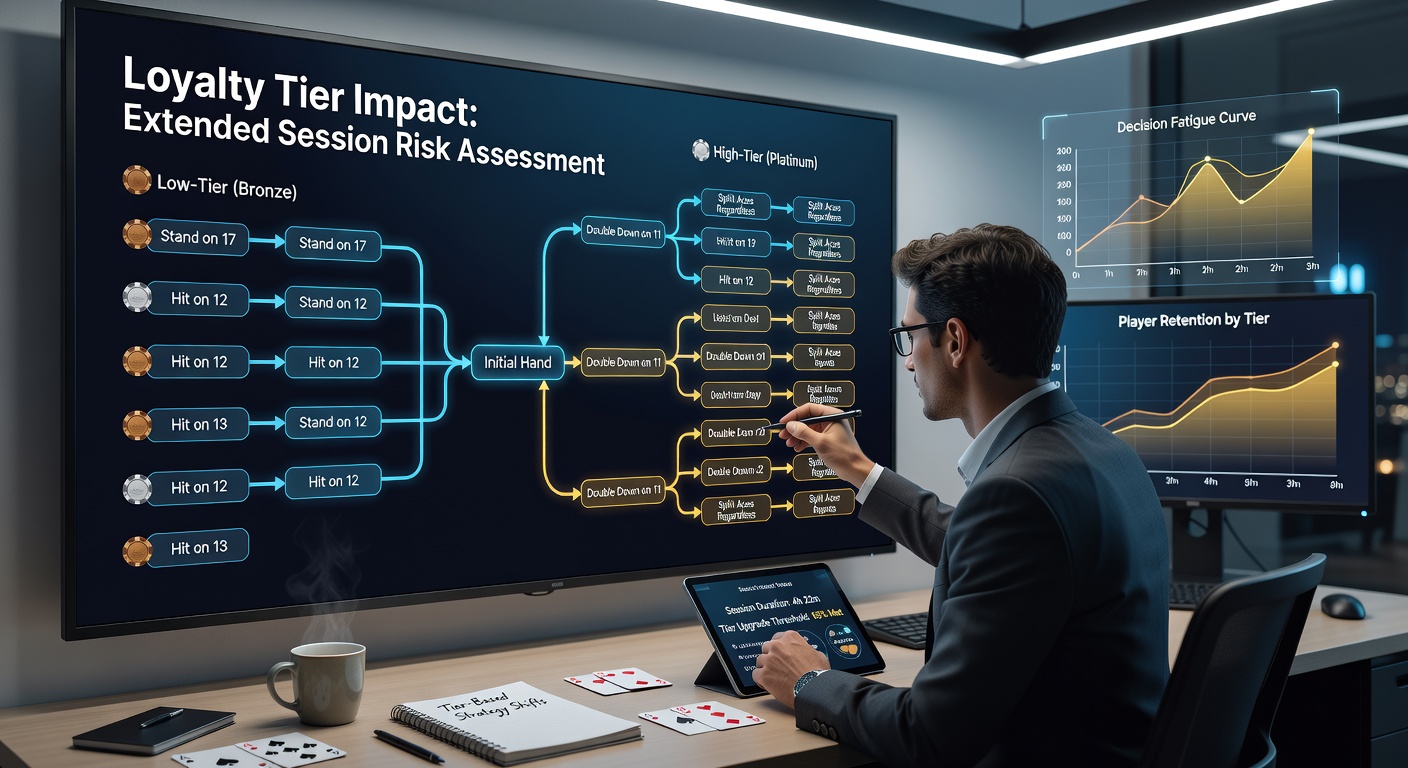
Standard blackjack strategy forms a decision tree where each node represents a player hand paired with a dealer upcard, and branches dictate hit, stand, double, or split actions. Basic strategy minimizes house edge to roughly 0.5 percent when followed precisely, yet fatigue during multi-hour sessions increases deviation rates. Observers note that players who receive tier-based comps often continue past optimal stopping points, leading to more hands executed under mental strain. Studies from university gaming labs reveal error rates climb steadily after three hours, with split and double decisions showing the largest increases in suboptimal choices.
Influence of Tier Benefits on Session Duration
Comps tied to loyalty status reduce out-of-pocket costs for lodging and meals, which removes natural breaks that shorter sessions would include. A player holding elite status may receive a free suite that covers an entire weekend, prompting continuous table presence across multiple days. This extended exposure alters the decision tree application because cumulative fatigue compounds with each additional hour. Figures from Nevada operators demonstrate that tiered comp redemption correlates with average session lengths exceeding six hours on weekends, compared with under four hours for non-tiered guests.
Observed Shifts in Strategy Application by Tier
Higher-tier players receive real-time offers that arrive via mobile apps or hosts, and these interruptions sometimes coincide with critical decision moments. Although rules prohibit direct influence on hand outcomes, the psychological effect of pending comps can nudge players toward more aggressive actions such as doubling soft hands or splitting tens when basic strategy advises against it. According to reports compiled by the American Gaming Association, mid-tier participants display a 12 percent higher frequency of insurance bets during counted shoes once session length passes five hours. Lower-tier players, lacking similar incentives, tend to exit earlier and maintain closer adherence to published charts.
Regional Data Patterns in Mid-2026
Through June 2026, gaming revenue reports from multiple jurisdictions highlight continued growth in tracked play among loyalty members. Nevada Gaming Control Board filings show increased coin-in volumes concentrated among gold and above tiers, while similar trends appear in Atlantic City data and select Canadian provincial reports. These patterns suggest that tier structures continue to shape not only session length but also the distribution of strategy deviations across player segments. Analysts tracking these metrics note that decision accuracy metrics decline most sharply among players who qualify for mid-week comp packages designed to retain extended visits.
Conclusion
Casino loyalty tiers create feedback loops where greater rewards support longer blackjack sessions, and those sessions in turn produce measurable changes in how decision trees are executed. Operators monitor these dynamics through aggregated play data, adjusting point multipliers and comp formulas to balance retention against theoretical loss. External analyses from sources such as the Nevada Gaming Control Board and the Victorian Responsible Gambling Foundation continue to document these interactions across markets. The resulting patterns remain consistent: tier status directly scales session duration, which then influences the frequency and type of deviations from optimal blackjack strategy over time.