How Dice Set Patterns in Craps Interact with Progressive Side Bet Accumulations Across State-Regulated Riverboat Floors
Written by Yves Schmidt · Jul 13, 2026
How Dice Set Patterns in Craps Interact with Progressive Side Bet Accumulations Across State-Regulated Riverboat Floors
State-regulated riverboat casinos maintain distinct operational environments where craps tables feature both standard wagers and layered progressive side bets, and observers note that player attempts at dice control create measurable shifts in how those side bet pools build over time. Dice setting involves specific grip and toss techniques that some players employ to influence outcomes on the come-out roll and subsequent point cycles, while progressive side bets accumulate across multiple tables or properties until triggered by rare combinations such as all sevens or matched pairs.
Dice Setting Techniques and Their Documented Patterns
Players who practice dice setting typically align the dice on a chosen axis before release, aiming to reduce the frequency of seven-outs once a point is established, and research from gaming laboratories indicates that controlled tosses can produce slight deviations from random distribution on certain faces though the effect remains statistically modest in controlled tests. Patterns emerge when multiple shooters at the same table adopt similar axis sets, such as the hardway set or three-v dice alignment, which increases the theoretical appearance of numbers like six or eight while suppressing others during short streaks.
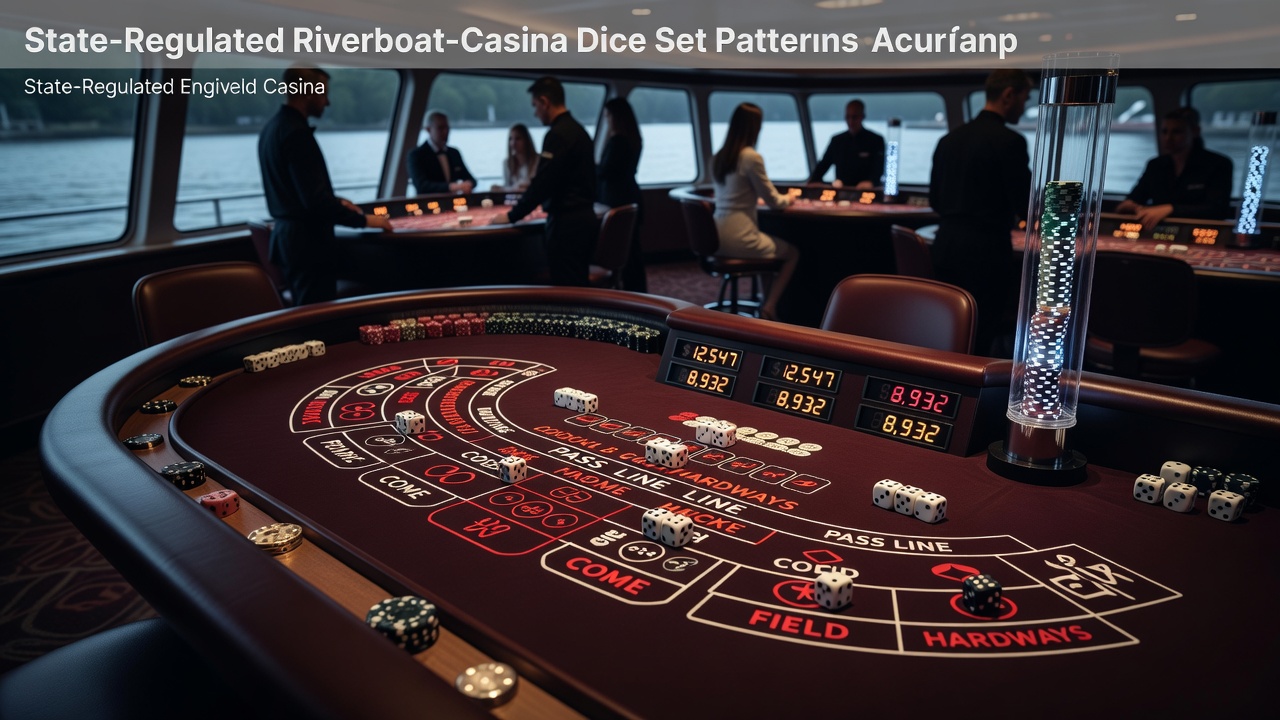
Riverboat floors in jurisdictions such as Illinois and Missouri often group craps tables near high-traffic walkways, allowing these setting patterns to influence adjacent progressive bet terminals that draw from pooled contributions across several properties. Data collected by state gaming commissions shows that tables with consistent setter activity experience slower depletion rates on certain side bet meters because fewer triggering combinations occur during controlled sequences.
Progressive Side Bet Structures on Regulated Riverboats
Progressive side bets in craps commonly link to outcomes like the Fire Bet or All Tall Small wager, where a portion of each bet feeds a growing jackpot displayed on electronic signs above the layout, and these accumulations reset only after a qualifying roll sequence hits. State rules require that progressive contributions remain segregated from the base game hold percentage, which means any alteration in roll distribution directly affects the rate at which the meter climbs without changing the underlying house edge on the main bets.
Across multi-property networks in Indiana and Iowa, side bet pools sometimes aggregate contributions from dozens of tables, creating jackpots that can reach six figures before payout, and regulators track these figures through centralized reporting systems that capture daily meter readings. When dice setting patterns reduce the occurrence of seven-outs, the interval between progressive triggers lengthens, allowing the accumulation to climb higher before distribution to winners.
Observed Interactions Between Setting Patterns and Bet Accumulations

Table supervisors on riverboat properties report that extended periods of controlled dice result in measurable changes to side bet contribution velocity, since fewer seven-outs mean fewer resets and therefore longer accumulation windows, while the same controlled rolls can increase the frequency of certain hardway combinations that trigger smaller progressive tiers. One study compiled by the University of Nevada, Reno gaming research group examined session data from Midwest riverboats and found that tables exhibiting repeated axis-aligned tosses showed a 2.3 percent slower meter growth rate on average compared with random-toss tables during equivalent betting volume periods.
Yet the interaction remains indirect because progressive bets resolve independently of point-cycle outcomes in many cases, and