How Lighting Variations Across Gaming Areas Impact Decision-Making Patterns at Roulette Wheels
Written by Olivia Berger · Jul 6, 2026
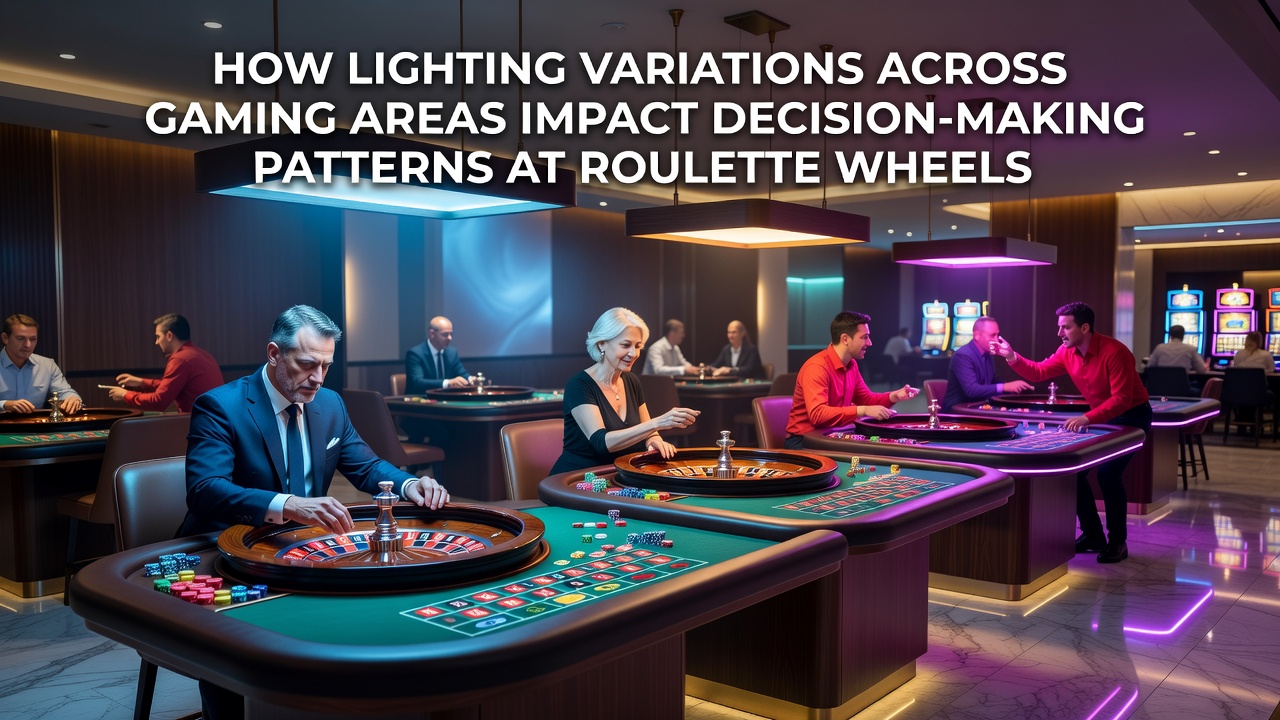
How Lighting Variations Across Gaming Areas Impact Decision-Making Patterns at Roulette Wheels
Casino floors deploy distinct lighting schemes that range from bright overhead arrays in high-traffic zones to softer, directional fixtures in private salons, and these differences alter how players perceive the spinning wheel, the ball trajectory, and the betting layout during each round. Research conducted by the International Gaming Institute at the University of Nevada, Las Vegas indicates that illumination levels directly affect visual acuity, color discrimination, and reaction timing, all of which feed into the sequence of choices a player makes when placing chips on inside or outside bets.
Lighting Configurations Across Gaming Zones
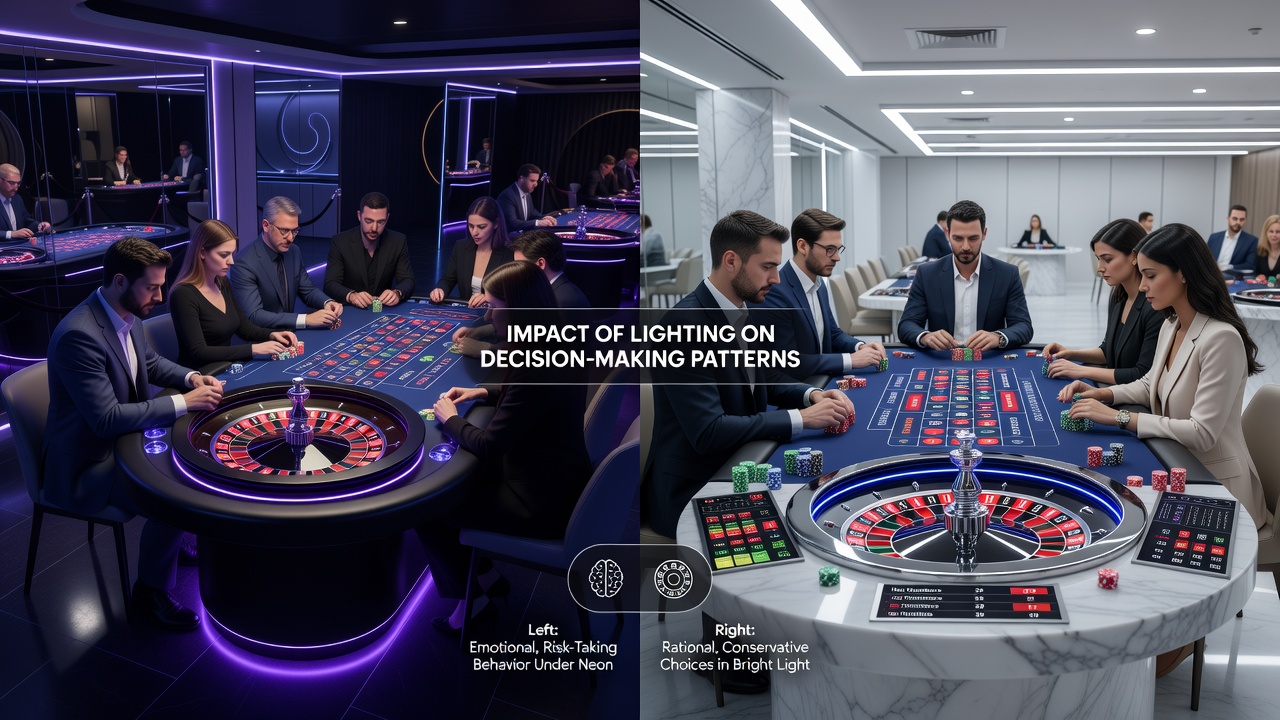
Main casino pits typically use cool white LEDs rated between 4000K and 5000K with illuminance values exceeding 300 lux, whereas dedicated roulette salons employ warmer 2700K sources that drop to 150 lux or lower, creating pockets of shadow around the wheel rim. These setups emerged as standard practice after 2018 renovations at several major properties, and facility records show that operators adjust fixture angles seasonally to maintain consistent contrast on the green felt. Data collected from floor sensors reveal that variance in lux readings between adjacent tables can exceed 120 units within the same bank of wheels, a spread that becomes measurable during peak evening hours when ambient crowd density rises.
Visual Perception and Wheel Dynamics
Observers note that higher-intensity lighting sharpens the contrast between the ball and numbered pockets, allowing faster tracking of velocity changes in the final seconds before the ball settles, while reduced lighting compresses depth perception and lengthens the time players require to confirm outcomes. Studies published in the Journal of Gambling Studies demonstrate that participants exposed to 500 lux environments register wheel outcomes 18 percent faster on average than those under 150 lux conditions, yet the same bright settings correlate with narrower betting spreads once multiple decisions accumulate over a thirty-minute session. Color temperature shifts also modify how red and black sectors register against the ivory ball, prompting measurable adjustments in outside-bet frequency when fixtures lean toward amber tones.
Decision Patterns Under Different Light Levels
Tracking software installed at properties in Nevada and New Jersey records that players seated at brightly lit perimeter tables place more inside-number bets during the first ten spins of a session, then gradually migrate toward column and dozen selections as session length extends past forty minutes. In contrast, patrons in dimmer VIP alcoves maintain steadier distributions across even-money options throughout equivalent durations, with fewer impulsive shifts after losses. These patterns hold across data sets gathered between 2023 and 2025, and the differences persist after controlling for player bankroll size and time of day. Casino operators in Atlantic City reported similar distributions when they installed tunable LED strips in 2024, allowing real-time adjustments that produced consistent changes in average bet placement intervals.
Equipment calibration logs further show that wheel speed sensors paired with overhead lighting maintain tighter variance in spin duration under cooler spectra, reducing the window during which players can reassess their initial stake before the dealer calls no more bets. This mechanical consistency interacts with the visual field created by fixture placement, producing a feedback loop that either accelerates or slows subsequent wager timing depending on the zone.
Regulatory and Operational Context in 2026
As multiple properties finalize lighting upgrades ahead of July 2026 openings and expansions, gaming control boards in both Nevada and New Jersey require documentation of fixture specifications during license renewal reviews. These filings include lux maps and color rendering index values, which regulators cross-reference against historical player behavior metrics supplied by the casinos themselves. The resulting datasets allow analysts to isolate lighting as one variable among many that shape session-level choices at individual wheels without attributing causation to any single environmental factor.
Conclusion
Lighting variations across gaming areas create measurable differences in how quickly players register outcomes and how they distribute subsequent bets at roulette wheels, patterns documented through sensor data, controlled observation, and operational records maintained by licensed facilities. Continued collection of these metrics through 2026 will clarify the extent to which fixture design interacts with other environmental elements to shape decision sequences on the casino floor.