How Progressive Jackpot Allocations in Hybrid Gaming Floors Shift Player Focus Between Video Poker Variants and Adjacent Craps Pit Wagers
Written by Olivia Berger · Jul 8, 2026

How Progressive Jackpot Allocations in Hybrid Gaming Floors Shift Player Focus Between Video Poker Variants and Adjacent Craps Pit Wagers
Hybrid gaming floors combine banks of video poker machines with traditional table games such as craps in adjacent pits, and progressive jackpot allocations create measurable shifts in how players distribute their time and wagers across these options. Data from multiple U.S. casino properties indicate that when a portion of each video poker bet contributes to a shared progressive pool, participation patterns change in both the machine area and the nearby table games.
Mechanics of Progressive Allocations Across Machine Variants
Video poker variants including Jacks or Better, Deuces Wild, and Double Double Bonus Poker receive different allocation percentages from operators, and these percentages determine the rate at which progressive meters increase. Research from the Nevada Gaming Control Board shows that a typical allocation of 1 to 3 percent of coin-in feeds the meter, while certain multi-hand versions receive higher contributions to maintain player interest during longer sessions. Observers note that when allocations favor one variant over others, players migrate toward the higher-progression machines even when the base pay tables remain comparable.
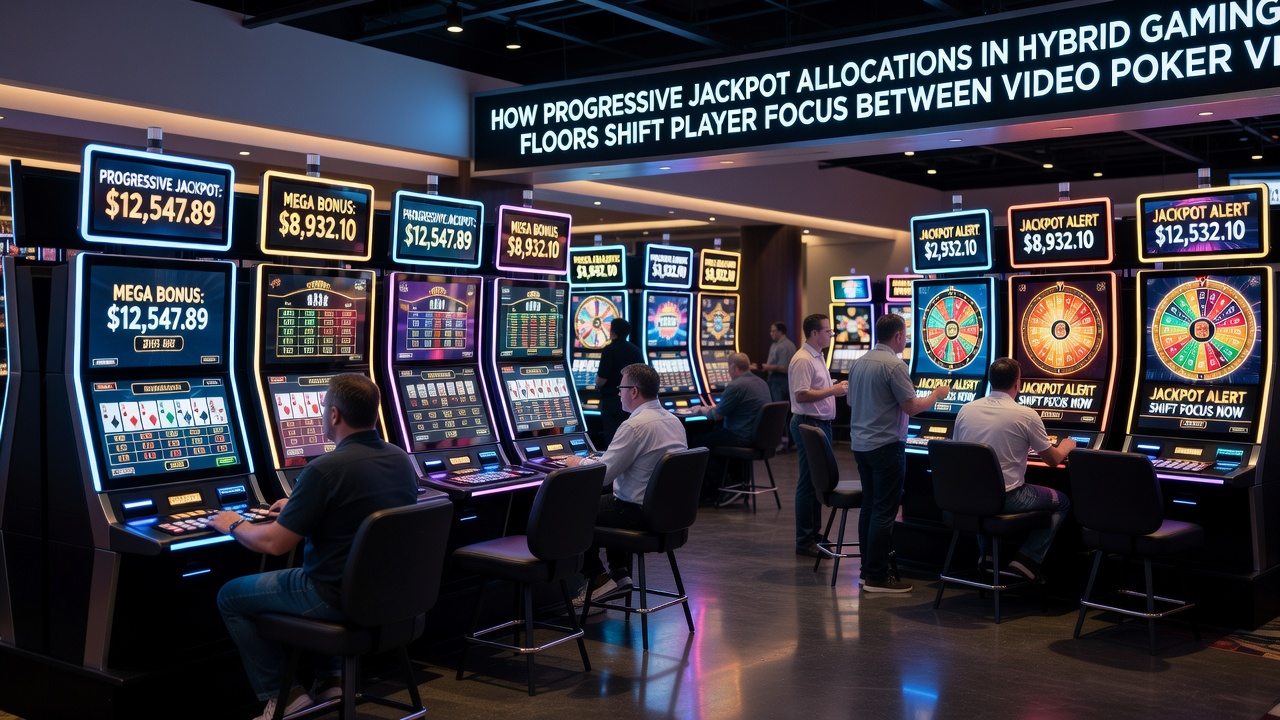
Those who study floor traffic patterns report that the presence of a visible progressive meter influences session length, with many players extending play on machines tied to the largest pools. Figures from midwestern properties reveal that machines connected to a shared progressive across multiple variants attract 18 to 25 percent more coin-in during peak evening hours compared with standalone units.
Player Movement Toward Adjacent Craps Pits
Adjacent craps pits experience indirect effects when progressive allocations draw sustained attention to video poker banks. Players who reach a threshold on the progressive meter often take short breaks that lead them into the craps area, where minimum wagers and proposition bets provide a change of pace. Data collected by the American Gaming Association indicate that properties with integrated progressive systems record higher crossover traffic between these zones during promotional periods when the meter reaches publicized milestones.
Because craps offers continuous action without the same meter-driven incentive, the shift remains temporary for most participants. Yet the proximity of the pits encourages some players to convert a portion of their bankroll into table wagers after extended video poker sessions, particularly when the progressive has not yet triggered.
Allocation Strategies and Observed Behavioral Patterns
Operators adjust allocation percentages across video poker variants based on historical performance data, and these adjustments correlate with changes in both machine utilization and table game volume. A study published by the University of Nevada, Las Vegas International Gaming Institute found that increasing the progressive contribution on one variant by half a percent can reduce play on neighboring variants by 7 to 12 percent within the same bank. At the same time, average wager size at adjacent craps tables rises modestly during the same intervals because players who leave the machines often place larger initial bets on the tables.
What's interesting is how these patterns hold across different property types. Regional casinos in states such as Pennsylvania and Indiana report similar migration effects when progressive allocations favor certain video poker games, while larger destination resorts in Nevada observe the same directional shifts at a greater scale. The underlying mechanism remains consistent: the visible growth of the progressive meter acts as a focal point that redistributes player attention and spending within the hybrid layout.
Impact on Promotional Structures and Floor Design
Promotional calendars often align with progressive meter milestones, and these alignments further influence how players move between video poker and craps. When operators advertise a progressive trigger near a specific date, traffic data show increased density in the video poker section followed by measurable spillover into the craps pit once the meter resets. Floor designers respond by positioning high-allocation machines closer to pit entrances, creating a physical pathway that facilitates the observed player transitions.
Regulatory filings from multiple jurisdictions confirm that these layout decisions are documented as part of standard operational reporting. The filings also note that the combined revenue contribution from both machine and table segments remains stable even as individual player focus shifts, because the progressive allocation draws additional coin-in that offsets any temporary reduction in table drop.
Conclusion
Progressive jackpot allocations function as a dynamic variable within hybrid gaming floors, directing measurable attention between specific video poker variants and nearby craps wagers through documented patterns of meter growth, player migration, and promotional timing. Data from regulatory bodies and academic studies continue to track these interactions as operators refine allocation percentages and floor configurations. The result is a measurable redistribution of activity that remains consistent across different regions and property scales.