Navigating Midweek Bonus Rollover Structures in Video Poker at Non-Strip Properties
Written by Eden Simon · Jul 17, 2026

Navigating Midweek Bonus Rollover Structures in Video Poker at Non-Strip Properties
Video poker players at non-strip properties encounter bonus rollover structures that require specific playthrough multiples before cashing out promotional credits, and these requirements often prompt adjustments in machine selection, bet sizing, and session timing. Regional casinos in markets such as Pennsylvania, Michigan, and the Midwest issue midweek offers that tie bonuses to video poker activity, creating measurable shifts in how participants approach paytable evaluation and variance management.
Core Mechanics of Midweek Rollover Offers
Operators structure midweek bonuses with rollover multipliers that range from 10x to 30x the bonus amount, and these figures appear in terms that specify eligible games along with minimum coin-in thresholds per hand. Data from property reports shows that video poker variants with higher hold percentages receive priority weighting in these promotions because they allow players to meet playthrough targets while preserving more of the initial bankroll. Properties outside major Strip corridors adjust these multipliers seasonally, with July 2026 updates at several Midwest venues introducing tiered rollovers that scale based on player loyalty level.
Participants review the fine print to identify whether Jacks or Better, Deuces Wild, or Double Double Bonus Poker qualify under the current terms, since ineligible machines can void remaining rollover progress. Observers note that casinos publish updated eligible game lists each Monday, which forces rapid recalibration of preferred paytables when new restrictions take effect.
Strategy Shifts Triggered by Rollover Requirements
Players adapt by favoring full-pay machines even when those titles carry slightly lower theoretical return percentages, because the need to generate coin-in volume favors titles that deliver more frequent small wins. Research indicates that bet sizing often increases to the maximum coins per hand once rollover progress reaches 60 percent of target, since partial completion reduces the risk of leaving unfulfilled requirements on the table. Non-strip venues report elevated play on 25-cent and 50-cent denominations during Tuesday-through-Thursday windows when bonuses activate, while higher-limit machines see reduced activity until rollover completion.
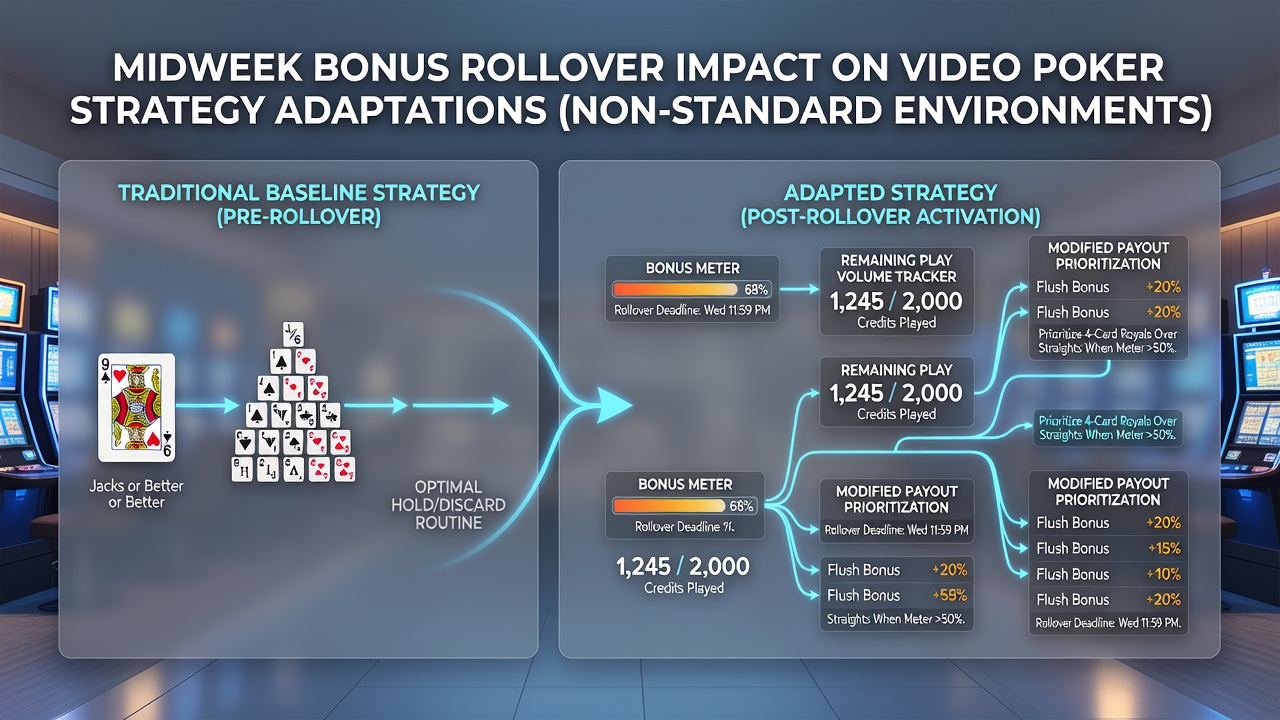
Session length extends when rollover structures demand 15x or greater multiples, prompting participants to break play into shorter blocks that still accumulate required coin-in without exceeding personal loss limits. Data shows that players who track progress via casino apps maintain higher completion rates than those who rely on manual tallies, because real-time updates prevent accidental play on non-qualifying variants.
Regional Variations Across Non-Strip Markets
Properties in Pennsylvania apply rollover structures that integrate with state-mandated reporting, requiring operators to disclose average completion times for video poker bonuses. Figures from the Pennsylvania Gaming Control Board reveal that midweek offers in 2025 produced completion rates above 70 percent when participants selected machines with 99 percent or higher theoretical returns. In contrast, Michigan venues emphasize multi-game terminals that allow seamless switching between qualifying titles without leaving the same machine cabinet, a feature that reduces downtime during rollover accumulation.
Canadian regulatory frameworks administered through the Alcohol and Gaming Commission of Ontario impose additional disclosure rules that list exact rollover percentages alongside game contribution rates, giving cross-border players clearer benchmarks when comparing U.S. and Canadian offers. These disclosures influence migration patterns as participants weigh travel costs against expected bonus value after rollover completion.
Bankroll and Variance Management Techniques
Participants recalculate optimal stop-loss points once rollover obligations attach to a bonus, because unfinished requirements convert promotional value into sunk cost. Studies from gaming research institutions demonstrate that players who allocate separate bankrolls for bonus play versus regular sessions achieve higher net retention rates, since the dedicated pool isolates variance spikes caused by aggressive bet sizing needed to meet volume targets. Non-strip properties increasingly offer midweek reload bonuses that reset on Wednesdays, creating recurring cycles that reward consistent attendance rather than single large deposits.
Observers track how paytable selection evolves when casinos cap maximum bet contributions toward rollover at five coins per hand, a rule that steers participants toward lower-denomination machines with more generous full-pay schedules. This adjustment preserves theoretical return while still generating the necessary coin-in volume.
Conclusion
Midweek bonus rollover structures continue to drive measurable adaptations in video poker play at non-strip properties, where machine choice, bet sizing, and session planning respond directly to published multipliers and eligibility lists. Regional regulatory data and property reports document these patterns across multiple markets, showing consistent player responses to volume requirements without altering underlying game mathematics. As operators refine terms ahead of July 2026 updates, participants maintain focus on transparent terms and real-time tracking tools to align strategy with each promotion's specific constraints.