Slot Machine Near-Miss Mechanics Across Regional Chains and Their Role in Extending Play Sessions Without Altering Core Payback Percentages
Written by Olivia Berger · Aug 5, 2026
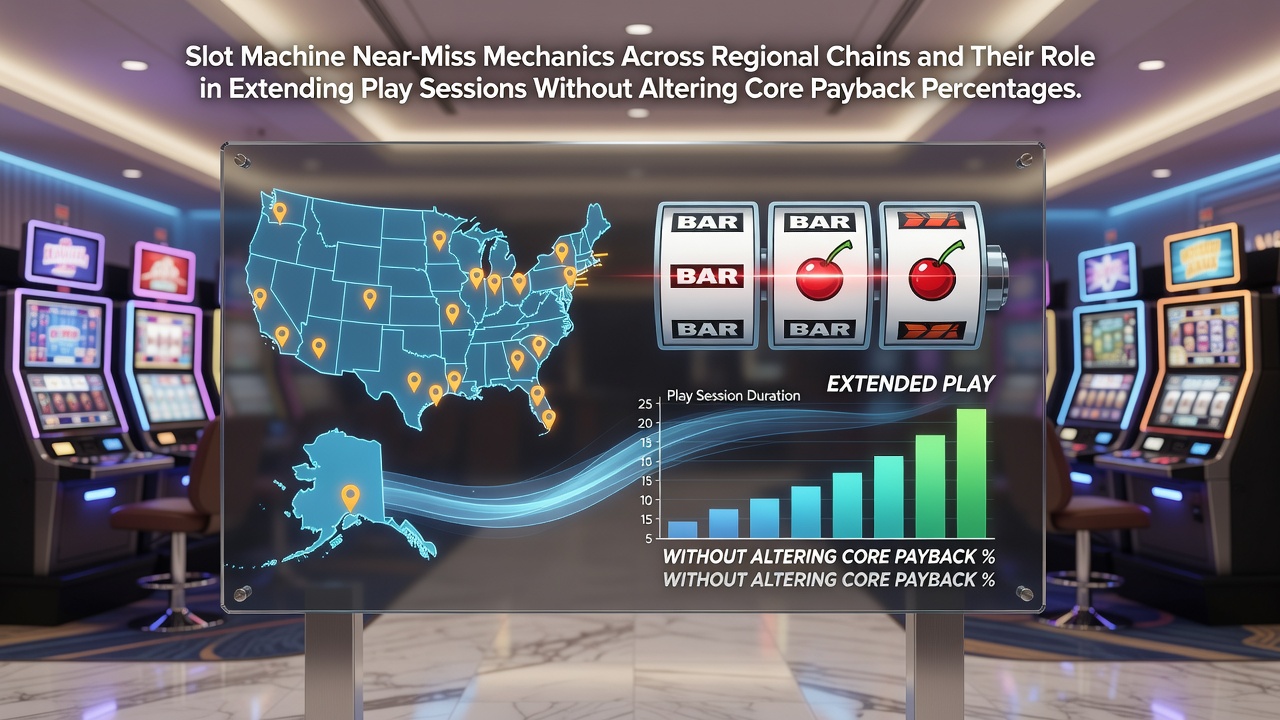
Slot Machine Near-Miss Mechanics Across Regional Chains and Their Role in Extending Play Sessions Without Altering Core Payback Percentages
Slot machine near-miss mechanics operate through precise reel programming that positions winning symbols just outside the payline more frequently than random distribution would allow, yet these adjustments leave the core payback percentage unchanged because the actual winning combinations remain governed by the same probability tables. Manufacturers achieve this effect by mapping virtual reel stops so that high-value symbols cluster in positions immediately adjacent to active paylines, creating the visual impression of an almost-won outcome while the mathematical frequency of payouts stays fixed according to certified random number generator outputs.
Technical Implementation Across Different Regional Operators
Regional casino chains apply these mechanics in distinct patterns shaped by local regulatory frameworks and floor management strategies. In North American properties operators often configure near-miss frequencies on video slots to align with peak evening hours, while properties in Australia and parts of Asia integrate similar systems into linked progressive machines where the visual tease occurs across multiple terminals simultaneously. Data from gaming laboratories shows that these configurations rely on weighted virtual reels rather than physical reel modifications, allowing operators to maintain consistent return-to-player figures certified by independent testing agencies.
One study released by the University of Nevada's gaming research division examined reel-mapping files from multiple manufacturers and confirmed that near-miss events increase in density without shifting the overall distribution of winning and losing outcomes. The research tracked thousands of spins across representative machines and found that the probability of landing a paying combination stayed identical whether near-miss weighting was present or absent, demonstrating that session extension occurs through behavioral response rather than any alteration to the game's fundamental mathematics.
Session Duration Patterns Observed in Chain Properties
Play session data collected from properties operated by major regional chains indicates measurable differences in average spin counts when near-miss features are active compared with control machines that lack the weighting. Observers note that players on machines with elevated near-miss rates tend to continue spinning for longer intervals before cashing out, even though the long-term payback percentage reported to regulators remains the same. These patterns appear across both standalone units and networked games, suggesting the effect stems from the visual feedback loop rather than jackpot size or bonus frequency alone.
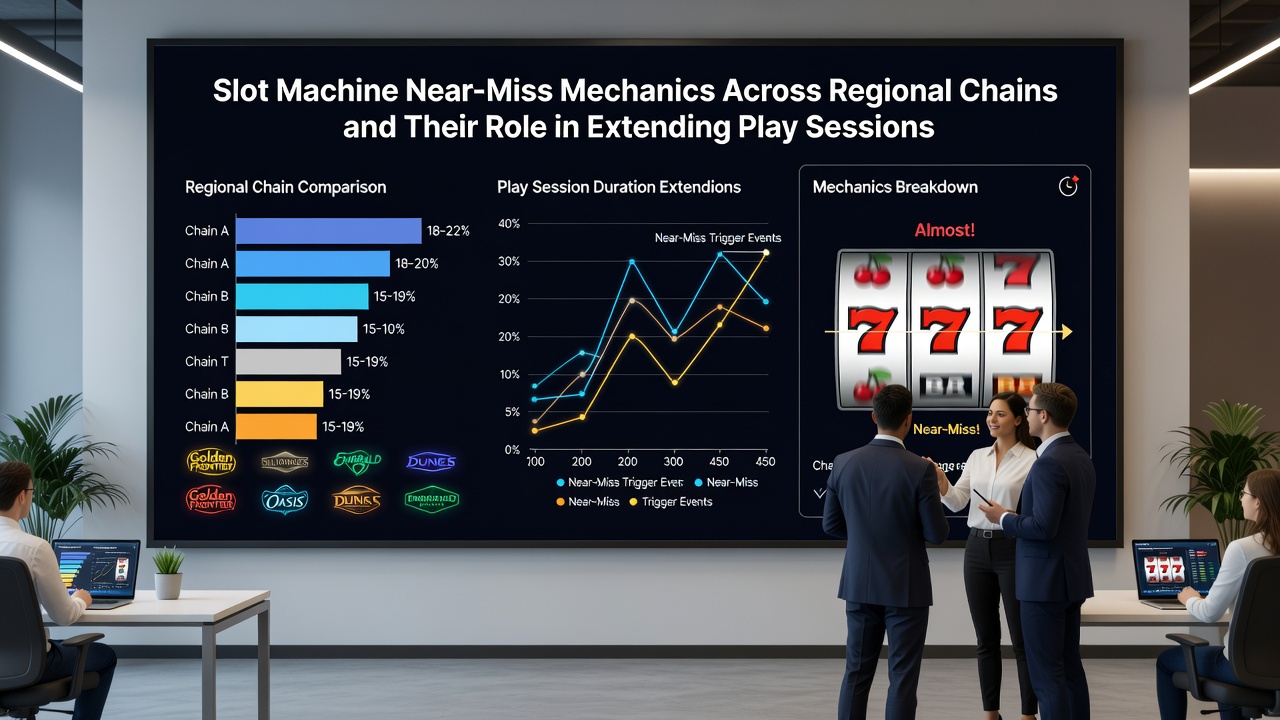
Regulatory filings from the Nevada Gaming Control Board and comparable oversight bodies in other jurisdictions require annual submission of reel-mapping documentation that separates near-miss weighting from the base probability tables. This separation ensures that any increase in visual near-misses does not translate into a higher or lower actual hit rate for paying combinations. Analysts reviewing these filings have documented that machines with prominent near-miss programming still deliver the same certified payback percentages over large sample sizes, confirming compliance with statutory requirements that prohibit changes to the underlying odds.
Regional Variations in Regulatory Oversight
Different regulatory environments impose varying limits on how near-miss mechanics may be deployed. Some jurisdictions mandate disclosure of reel-weighting parameters during the approval process, while others focus on post-deployment audits that verify payback percentages remain within approved ranges. In markets where multiple chains compete for floor space, operators have been observed adjusting near-miss intensity on specific game titles to influence player dwell time without touching the certified return-to-player metric. These adjustments are tracked through electronic metering systems that record both near-miss events and actual payout events separately.
International comparisons reveal that chains operating across borders often standardize their near-miss algorithms at the manufacturer level while allowing local management teams to select which game themes receive heavier weighting. This approach maintains consistent technical standards yet permits adaptation to regional player preferences documented through aggregated session data. Research reports from academic centers in Australia and Canada have tracked these cross-border deployments and found no evidence that near-miss weighting alters the long-term distribution of player returns when measured against regulatory benchmarks.
Measurement of Behavioral Impact
Player tracking systems employed by regional chains capture spin-by-spin activity that researchers use to quantify how near-miss events correlate with continued play. These systems log the exact reel positions for every outcome, allowing analysts to isolate the behavioral response to near-misses from other variables such as bonus triggers or progressive jackpots. Findings from multiple datasets indicate that players exhibit measurable increases in spin velocity immediately following near-miss sequences, yet the cumulative return over thousands of spins aligns with the machine's certified payback percentage.
Because the underlying random number generator continues to select outcomes according to fixed probability tables, the extension of play sessions occurs entirely through player decision-making rather than any shift in game mathematics. Regulatory bodies in several regions now require periodic submission of near-miss frequency reports alongside traditional payback percentage audits to maintain transparency around these behavioral mechanisms.
Conclusion
Slot machine near-miss mechanics function as a behavioral design element that increases the frequency of visually compelling but non-paying outcomes across regional casino chains while preserving the certified payback percentages that determine long-term player returns. Technical implementation relies on virtual reel weighting that regulatory frameworks in multiple jurisdictions require to be documented separately from base probability tables. Session data collected from diverse properties demonstrates extended play intervals under these configurations, yet independent verification confirms that actual winning probabilities remain unchanged. Continued regulatory oversight through reel-mapping audits and payback certification processes ensures that these mechanics operate within established legal boundaries across different markets.